lodestone
DADGAD tuning
DADGAD tuning is D A D G A D, from the thickest string to the thinnest. From standard, lower the 6th, 2nd and 1st strings a whole step.
Lodestone for iPhone shows these strings too, with the one you're tuning lit up. 99¢, once.
DADGAD tuning notes and frequencies
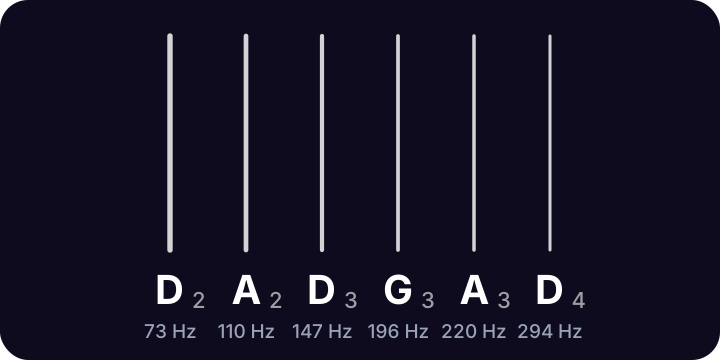
| String | Note | Frequency | From standard |
|---|---|---|---|
| 6th | D2 | 73.42 Hz | E → D whole step down |
| 5th | A2 | 110.00 Hz | no change |
| 4th | D3 | 146.83 Hz | no change |
| 3rd | G3 | 196.00 Hz | no change |
| 2nd | A3 | 220.00 Hz | B → A whole step down |
| 1st | D4 | 293.66 Hz | E → D whole step down |
Frequencies use A4 = 440 Hz. Strings are numbered from the thinnest.
The open strings make a chord that's neither major nor minor, which is why DADGAD is loved for Celtic and folk fingerstyle playing.
Tap a string above to hear its note, or turn on the mic: the string you're tuning lights up and glows brighter as you get close.
How to tune to DADGAD
- Lower the 6th string from E to D.
- Lower the 2nd string from B to A.
- Lower the 1st string from E to D. The A, D and G strings stay put.
Questions
Is DADGAD major or minor?
Neither. The open strings are D, A and G, with no third, so they sound open and ringing (a Dsus4 chord).
More tunings
- Standard E A D G B E
- Drop D D A D G B E
- Half step down E♭ A♭ D♭ G♭ B♭ E♭
- D standard D G C F A D
- Drop C C G C F A D
- Open G D G D G B D
- Open D D A D F♯ A D
- Bass tuner E A D G
- Ukulele tuner G C E A
- Violin tuner G D A E

Lodestone for iPhone
Open Lodestone and play. It's already listening. Pick your instrument to see its strings, with the one you're tuning lit up. 99¢, once. No ads, no accounts, no subscription.